Complications / 3 min read
Buying a chronograph? Make the listing prove it.
A dramatic dial is not a specification. Before choosing a chronograph, confirm the timing function, decode the counters and decide whether you can actually read the result.
TICKOFF Editorial / / AI-assisted
01
Buy the function, not the suggestive name
How do you know whether a watch offers the stopwatch function you want? Look for an explicit chronograph specification, then confirm the counter functions and operation in the exact model’s instructions. A name with timing ambitions is not enough. Neither is a dial that looks ready to direct air traffic.
A chronograph combines ordinary timekeeping with elapsed-time measurement that can be started, stopped and reset. Chronometer means something different: a timekeeping-performance designation. One word does not establish the other.
The Seapro Guardian SP3344 explicitly lists a chronograph quartz movement. The Seapro Chronoscope SP0131 lists quartz movement without identifying a chronograph function. That does not prove the latter lacks one; it means the description leaves your question unanswered. Ask before treating it as a timing tool.
02
Demand a map of the small dials
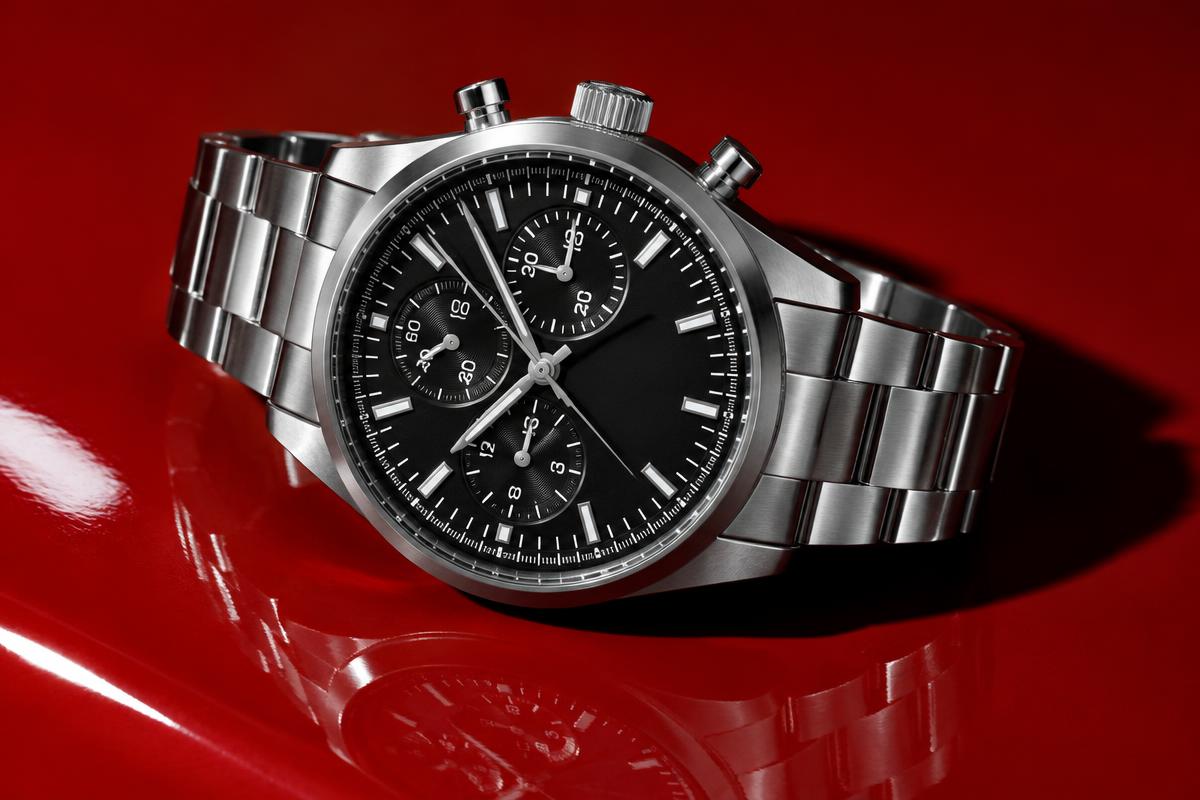
Once the chronograph function is established, find out what each hand measures. Subdials can show elapsed minutes, elapsed hours, running seconds or other information, depending on the movement. Counting little circles is not a substitute for understanding them. Three subdials do not automatically mean three stopwatch counters.
Start with what you intend to time. Then ask which counter displays the relevant elapsed time and whether its markings are readable for you. If the listing leaves the timer’s functions unexplained, request the exact instructions rather than filling the gaps with optimism.
Also identify the everyday seconds display. The large central seconds hand may serve the chronograph and remain stationary while a smaller hand keeps running. That is not automatically a fault. Know the cast before accusing the lead actor of missing a cue.
03
Compare readability, not just colour
The Cascade Snowcap pairs a white dial with black subdials; the Cascade Obsidian pairs a black dial with matching black subdials. Both descriptions specify Japanese Miyota quartz chronograph movements. They offer a useful comparison: contrasting counters versus a more unified dial.
Those colour descriptions alone cannot crown a readability winner. Check whether you can distinguish the hands, markings and counters you will use, while still reading ordinary time at a glance. A striking colour scheme earns attention; a readable result earns its place.
Consider pusher comfort too, if you can assess the watch before buying. The practical question is whether operating the timer and reading its result feel straightforward. More visual detail is not necessarily more useful information.
04
Let the manual have the final word
Many conventional chronographs use one pusher to start and stop, and another to reset after stopping. Arrangements and reset behaviours differ, however. Follow the exact manufacturer’s manual rather than assuming two buttons guarantee a familiar sequence.
For water use and care, defer to that same model-specific manual. Never operate pushers underwater unless the manufacturer explicitly permits it for that model.
Your buying checklist is short: confirmed chronograph function, understood counters, readable elapsed time and clear operating instructions. If any answer is missing, pause. Mystery belongs in the styling, not the specification.
Enough reading. Find your next obsession.
Strap up